

UPDATES
8/16/2026: New World Screwworm has been detected in Val Verde County in a sheep.
Texas currently has 4 active cases, located in the following counties: Val Verde, Terrell, Brewster. All known cases have been observed in domestic livestock; no wildlife or feral animal cases have been reported at this time.
To track active cases, use the USDA’s Confirmed Detections dashboard:
6/4/2026: On June 3rd, the USDA announced the first detection of New World Screwworm in Texas, in a 3-week-old calf in Zavala County, 90 miles southwest of San Antonio and east of Eagle Pass.
To review all USDA New World screwworm announcements, click below.
What is New World Screwworm?
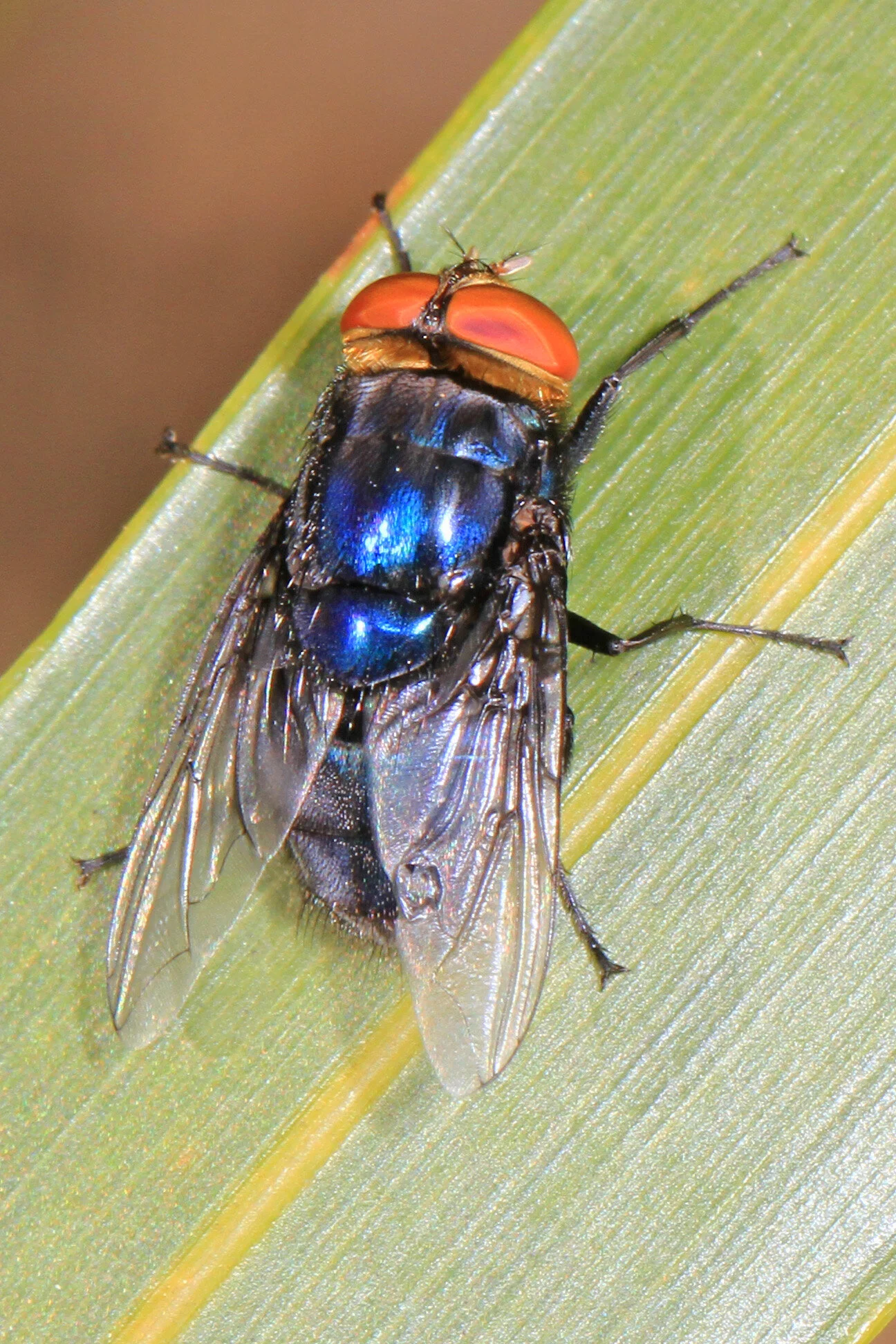
Photo credit: Screwworm-Cochliomyia hominivorax-Big Pine Key, Florida by Judy Gallagher flickr, CC BY 2.0
New World Screwworm (Cochliomyia hominivorax) is a parasitic blowfly species whose larvae feed on living tissue after the adult flies lay their eggs in an open wound. Infestations of this species pose serious risks to livestock, wildlife, pets, and even people, in addition to potentially destabilizing livestock and wildlife economies and food supply chains.
State and federal agencies are actively preparing for the encroachment of this parasite into Texas and other border states, due to its recent advancement into northern Mexico from further south. Becoming informed now is critical.
If you live and work along the Texas border—or otherwise want to better understand this emerging concern—watch the recording to learn how to protect your livestock, your pets, and your family and neighbors, as well as wildlife. Spread the word to help others become informed as well.
We encourage you to watch the webinar recording below as soon as possible to prepare for further advancement of New World Screwworm into Texas. DRC will continue updating this page as new information is provided by the USDA, Texas A&M AgriLife Extension, and the Screwworm Coalition of Texas.
New World Screwworm 101 Webinar
Wednesday, May 6, 2026
Romey Swanson of the Devils River Conservancy and Andrew Earl of the Texas Wildlife Association hosted an informative online session about the New World Screwworm (NWS), a parasitic species of blowfly, with a regional focus on the Texas Borderlands, where infestations of the screwworm are expected to increase in frequency as the population spreads north from Central America and Mexico.
The hosts were joined by Dr. Sonja Swiger, an Extension Entomologist with the Texas A&M AgriLife Extension Service and a professor in Texas A&M University’s Department of Entomology.
This webinar recording features knowledgeable speakers who provide updates on the historical context of NWS in Texas, the state of preparations to combat this species, and actionable information about how to both identify and report NWS larvae observations in any animal, and treat livestock and pets if it is discovered.
WATCH THE RECORDING
For accurate subtitles, click the closed captions [CC] icon in the top right corner of the video window. Expand the video window by clicking the set of opposite-facing arrows in the bottom right corner.
PART 1

WHAT’S OLD IS NEW AGAIN: STATUS AND THREATS OF NEW WORLD SCREWWORM
Andrew Earl
Director of Conservation, Texas Wildlife Association
Email: aearl@texas-wildlife.org
Andrew Earl serves as the Director of Conservation for the Texas Wildlife Association. At TWA, Andrew bridges the organization’s issues & advocacy and landowner education programs. He serves as liaison to the organization’s Wildlife Conservation and Land & Water committees, responsible for developing and advancing priorities before the Texas Parks & Wildlife Commission and state legislature. He works closely with the TWA education team to ensure that workshop curriculum reflects the emerging issues facing Texas landowners—and vice versa—that the needs and concerns of landowners are accounted for in the organization’s advocacy work.
PART 2

OVERVIEW OF NEW WORLD SCREWWORM AND MANAGEMENT TECHNIQUES
Sonja L. Swiger, PhD
Professor & Livestock/Veterinary/Medical Extension Entomologist, Texas A&M University & Texas A&M AgriLife Extension Service
Email: slswiger@ag.tamu.edu
Sonja L. Swiger, Ph.D. is a professor in the Texas A&M University Department of Entomology and an Extension specialist with Texas A&M AgriLife Extension. Her research and teaching interests lie in the field of managing nuisance biting flies and disease vectoring insects that impact the health of cattle and other livestock, wildlife, and humans. Swiger plans, conducts, and participates in educational programs for pest management of arthropods and diseases attacking livestock, companion animals, and public health. Swiger has developed several educational materials and programs to better educate and serve Texans in regard to mosquito borne diseases and was the lead PI for outreach education with the CDC funded Western Gulf Centers of Excellence in Vector Borne Diseases and is currently a collaborator with the CDC funded Gulf South V.E.C.T.O.R. Teaching Education Center. Over the past five years she has attracted over $1M dollars in support of her educational and research programs. She is currently serving as the President for the SWB-ESA, President for the Texas Mosquito Control Association, and chair of the SWB-ESA Awards committee, in addition to serving on many other committees.
ADDITIONAL RESOURCES AND CONTACTS
WEBPAGES:
ARTICLES:
FDA Press Release: FDA Issues Emergency Use Authorization for Drug to Treat New World Screwworm in Dogs and Puppies (August 13, 2026)
FDA Press Release: FDA Issues Emergency Use Authorization for Drug to Prevent New World Screwworm in Multiple Species, Including Sheep, Cattle, Goats, and Swine (August 7, 2026)
USDA Confirms Presence of New World Screwworm in the United States (June 3, 2026, Washington, D.C.)
New World Screwworm: Rise, Fall, and Resurgence (Hibbard, 2025. American Society for Microbiology)
ADDITIONAL CONTACTS:
Suspected cases of New World Screwworm in livestock and exotics (maggots visible in a wound on a living animal) should be reported to your veterinarian. You can also contact your regional Texas Animal Health Commission office.
For counties along the Texas border from Terrell down to Cameron and Willacy, contact Dr. Sandra Leyendecker, the Regional Director for the Texas Animal Health Commission’s Laredo Region
Phone: 956-568-5741
Observations of New World Screwworm infestations in wildlife (maggots visible in a wound on a living animal) should be reported to your local Texas Parks and Wildlife county biologist. Record the species, date, time, and your coordinates to provide to the biologist so they can potentially locate that animal and confirm the report as a New World Screwworm infestation.
For Val Verde County, contact Austin Stolte.
Email: austin.stolte@tpwd.texas.gov
Phone: 830-212-3030
Questions? Email info@devilsriverconservancy.org