
A Texas Story About Firefly Conservation and Research
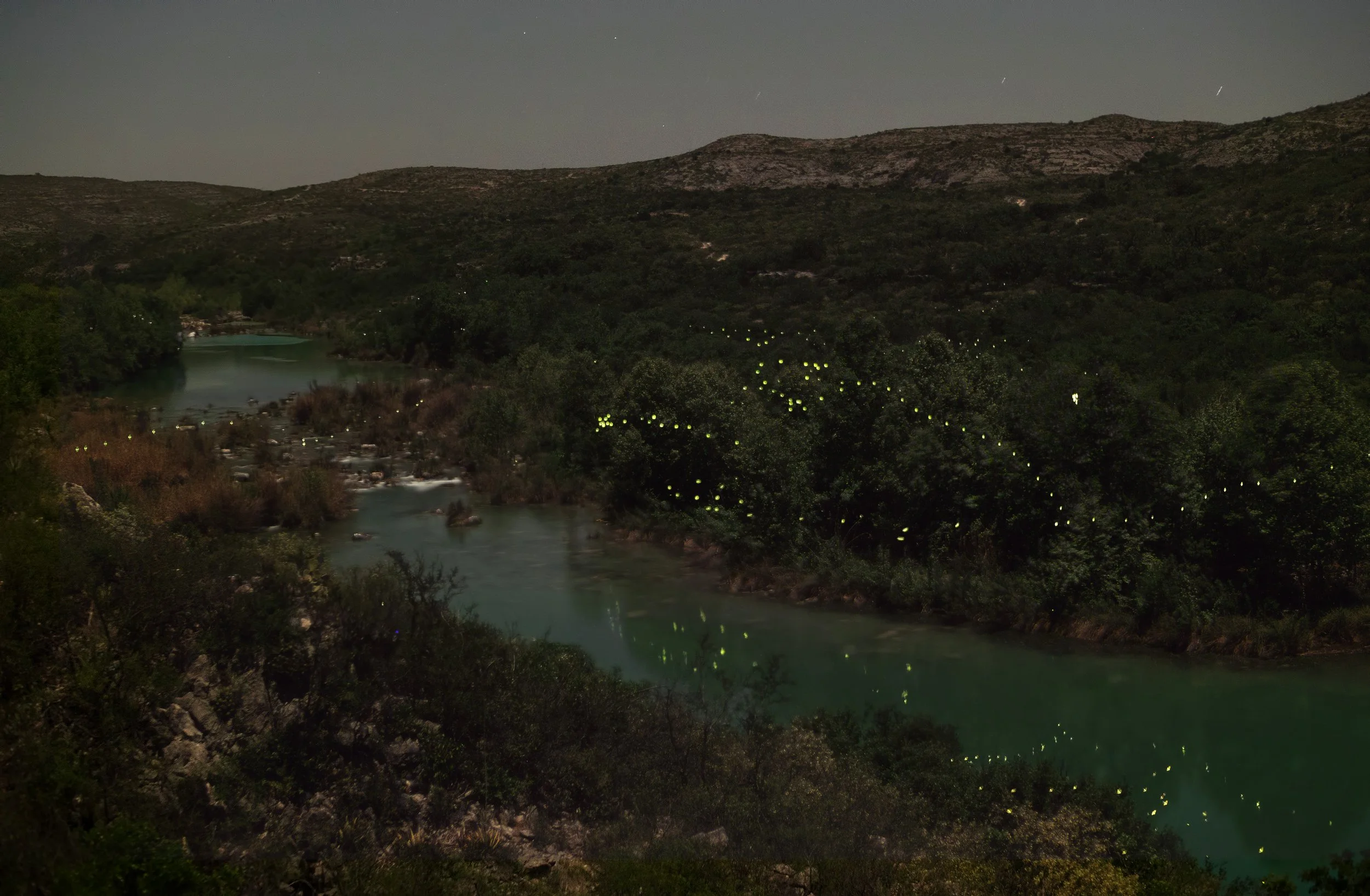
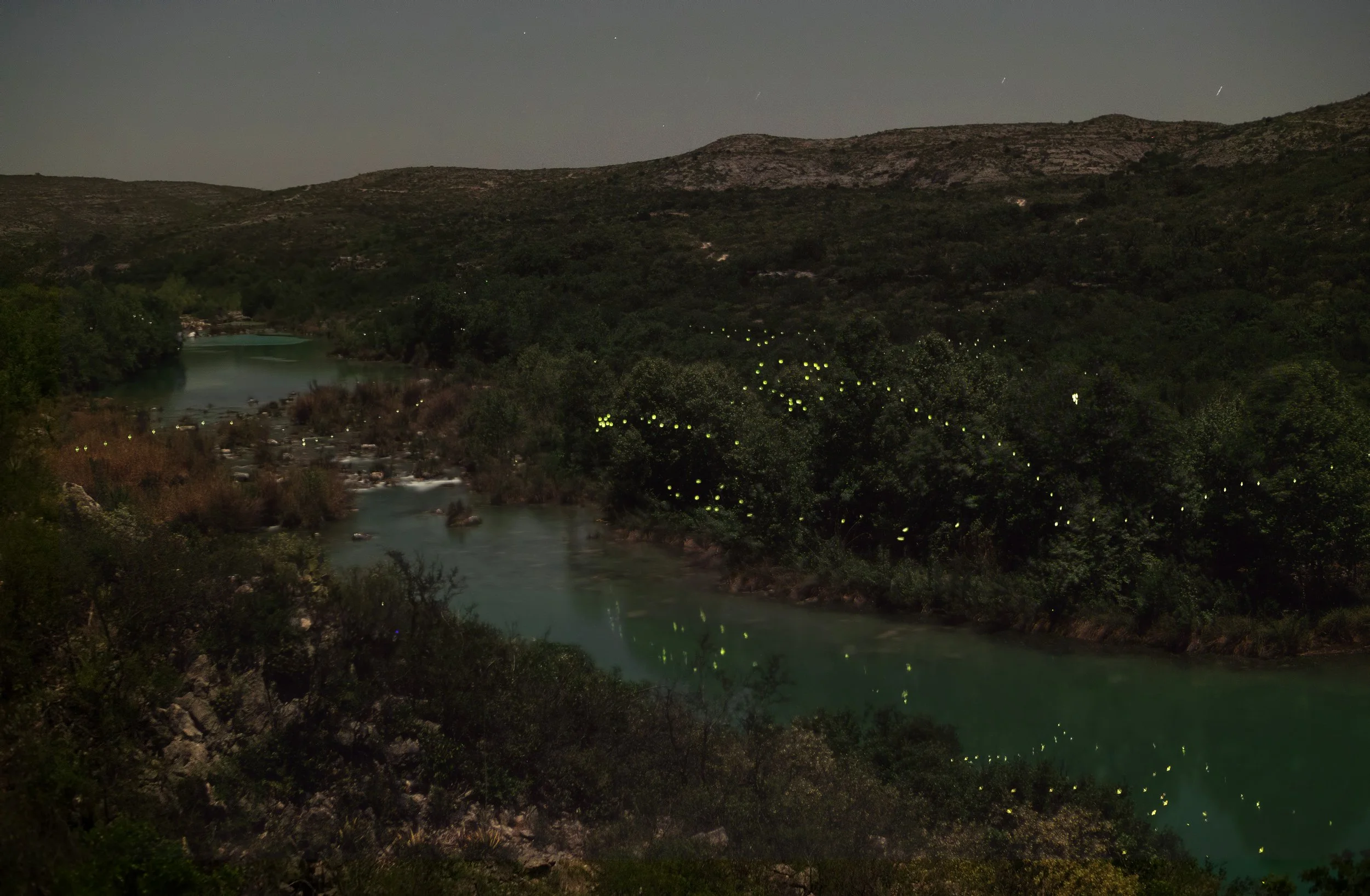
Firefly flashes at the Dry Devils Rapids, merge of timelapse images. Credit: Radim Schreiber
It was 2008, and Ben Pfeiffer was driving down the road half listening to NPR on the radio when the host mentioned that firefly populations at a park in the Mid-Atlantic were in decline. Just that. No lengthy discussion, no full podcast episode—just a blip on the radio, the kind of thing that slides right past you on an ordinary Tuesday. But that statement was enough to spark his curiosity about this seemingly ubiquitous beetle, also known as a lightning bug, that most Texans know from warm nights, chasing them across summer lawns after dark. And ultimately, it would put him on a path that would change his life, and our understanding of the state’s fireflies, forever.
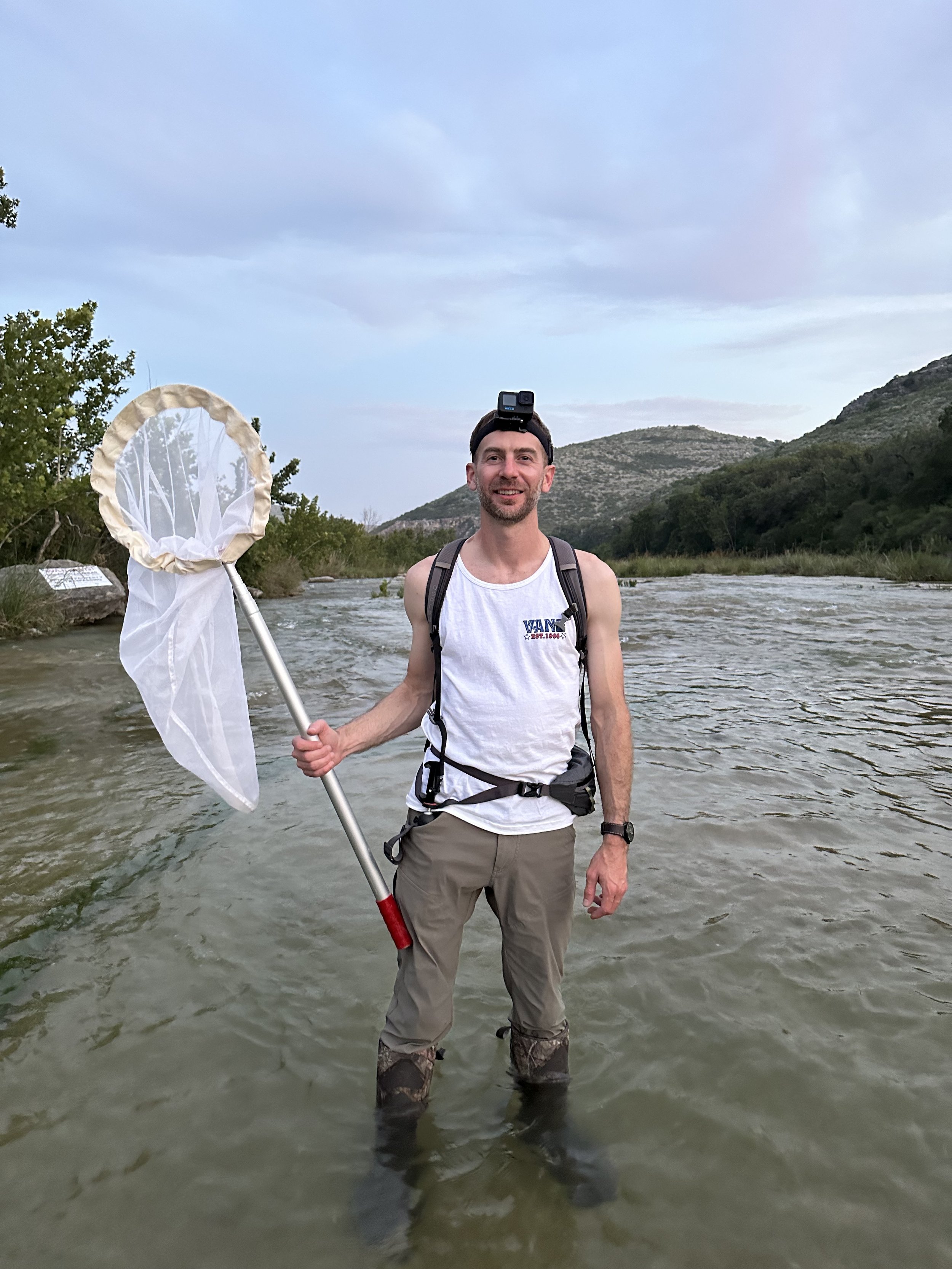
Ben Pfeiffer in full firefly catching effect at the Devils River.
The more he dug, the more he realized how little had actually been documented. Field surveys turned up information nobody had thought to look for in Texas watersheds— flash-pattern variation, habitat specialization, species behavior—the kind of work that had never gone much deeper than taxonomy. These efforts led him found Firefly Conservation & Research in 2009, after discovering that fireflies’ popularity as nostalgic symbols of summer did not translate to efforts to study them—or protect them—particularly in Texas. The nonprofit’s mission is straightforward but comprehensive: to document, understand, and conserve the fireflies of Texas and North America through scientific research, habitat protection, and public education.

Over the past 15 years, the work has expanded from those initial field surveys to more comprehensive efforts to catalogue species across the state, as well as contributions to extinction risk assessments for international organizations such as The Xerces Society for Invertebrate Conservation and the International Union for Conservation of Nature (IUCN). Pfeiffer has also sought to document regional variants of known species and has searched for rare and ‘lost’ species. In conjunction with these research efforts, Firefly Conservation & Research fulfills its mission through public education campaigns which reach tens of thousands of people every year, as well as more targeted training efforts for landowners and conservation groups to manage habitat that supports fireflies.
But how are fireflies observed and catalogued scientifically?
Cataloguing a firefly species is slow, patient work. Pfeiffer heads out after dark during the peak flash period—the brief window when males are signaling and females are paying attention—and films the display, recording flash interval, color, and flight height. But he's not just watching the fireflies. He's reading the whole landscape: which native plants they're flying over, where the flashing stops and the dark begins, whether they're down in the riparian vegetation along a creek or up in the drier upland brush above it. Elevation matters. So does what's growing there. Once the survey is done, he may collect voucher specimens—a handful of individuals retained for morphological study and DNA work, the unglamorous but necessary step of making sure what you're looking at is actually what you think it is.
Timelapse video of fireflies flashing at the Devils River. Video credit: Radim Schreiber
Flash patterns are what Pfeiffer calls a behavioral fingerprint—unique to each species, as reliable as a signature, and the single most important thing to document. The night has its own choreography. Some species emerge right at dusk, do their thing, and fade out before others even get started. Each has its window, and some of those windows are narrow—forty-five minutes, sometimes less. When it ends, it ends. The field goes quiet, a few stragglers blink on and off like they didn't get the memo, and just like that, the night moves on to something else.
Getting it all on video is another matter. Low light makes clean footage hard to come by, and clean footage is everything. Add in the South Texas heat, clouds of mosquitoes, snakes, remote and rugged terrain, the occasional poacher, and the odd truck full of guys driving the back roads drinking beer, and you start to understand why this data doesn't just collect itself.
Video of fireflies flashing at the Devils River. Sound on to hear commentary from an eastern screech owl (and Pfeiffer and company enjoying the fireflies). Credit: Ben Pfeiffer
So why should we care about fireflies beyond a vague sense of loss as our summer nights are increasingly illuminated by artificial lights crowding out the softer glows of fireflies and starry skies?
Fireflies are ecological indicators—when they disappear, something larger is usually already wrong. Habitat fragmentation, groundwater depletion, artificial light at night (ALAN), and other symptoms of a landscape under pressure all take their toll. But this isn't just a story about insects. As Pfeiffer puts it, the fireflies lighting up Texas fields and creek bottoms tonight are about as good as it's going to get. As their numbers quietly thin across the state, a piece of the particular character of Texas goes with them—the kind of thing you don't notice losing until one summer you realize the yard just doesn't light up the way it used to. That matters for the ecosystem. It matters for people too.
“They represent one of the last living connections many people have to natural wonder. Losing them would mean losing both biodiversity and cultural heritage”
Many firefly species are still poorly understood—and what we don't document, we can't protect. That matters more than it might seem, because fireflies carry evolutionary diversity: distinct lineages shaped over millions of years into species found nowhere else on earth, each one a biological story that science is only beginning to read.
Nowhere in Texas makes that clearer than the Devils River Basin. This is one of the least disturbed landscapes in the state—remote, rugged, and largely untouched—and what is present there offers a rare glimpse at what this country looked like before people reshaped it. Pfeiffer hypothesizes that the region may represent an ancient evolutionary refuge, its unique assemblage of species shaped over thousands of years as the climate shifted from more temperate conditions to the drier, harsher terrain we know today. The species found in the Devils River Basin aren't just rare; they're distinct to the region, and what they represent is still being understood.
That diversity includes:
An all-black population of Photinus concisus (pictured)
Abundant and unusually predatory populations of the Photuris genus
Observed but unrecorded flash patterns in the basin, which suggest possible undescribed species, including a long trailing green flash never before reported
The historic range of the lost Amber Comet firefly, Pyractomena vexillaria
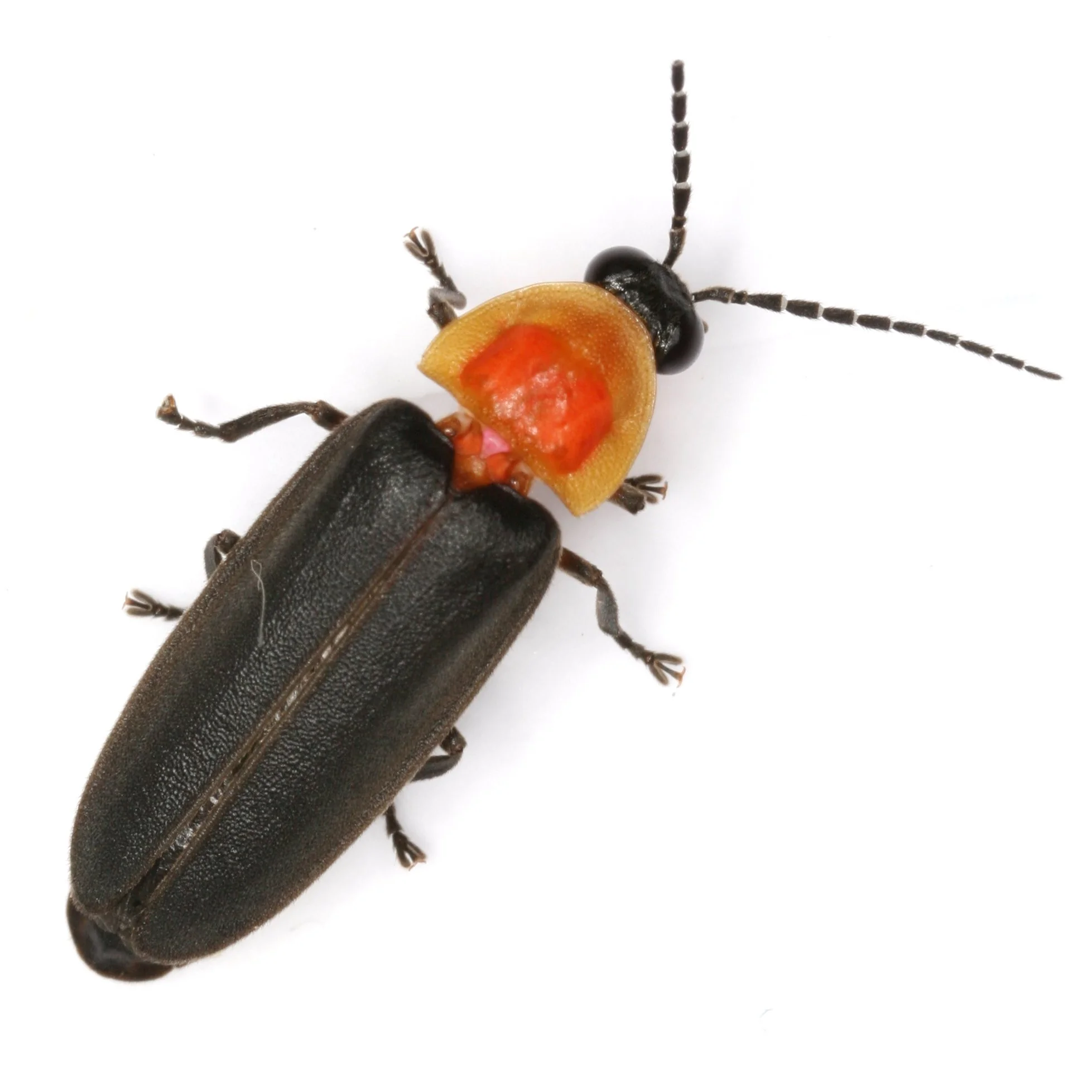
Credit: Ben Pfeiffer
Pfeiffer first identified this genetically distinct black morph of P. concisus in the Devils River Basin, including in the Blue Sage neighborhood. Elsewhere in Texas, P. concisus individuals usually have a yellow margin along the wing covers. While darker individuals can occasionally show up in other regions of the species’ range, no other population in Texas is completely black like the one found at the Devils River.
What makes the Amber Comet firefly ‘lost’?
Pfeiffer has been hunting this species for over ten years. Last documented in the 1940s along the lower Devils River, Pyractomena vexillaria vanished when the damming of the Rio Grande created Lake Amistad, swallowing the marsh habitat it depended on. Whether it survived somewhere in the remnant wetlands along the reservoir's edges has been an open question ever since.
The lead he'd been waiting for came from an unlikely place—a photo posted online by a bird photographer who had stopped at the Amistad National Recreation Area visitor center. Pfeiffer reached out, but the photographer couldn't remember exactly where the shot was taken. Then, a day later, they called back. The white building in the background had jogged the memory. That detail mattered.
What followed was careful, painstaking work. Pfeiffer studied the morphological features visible in the photograph—particularly the pronotum, the plate behind the head that varies in shape between species—and compared them against known specimens. The location helped too. Val Verde County is one of only two counties where the species has ever been documented. Taken together, it represents what may be the first photograph ever taken of a living Pyractomena vexillaria—not certain, but possible, and after ten years of searching, that's no small thing.
Firefly Conservation & Research contributed data to extinction risk assessments that helped classify the species as endangered, and Pfeiffer is a contributing author on a scientific paper currently under review on lost firefly species across the U.S. and Canada. It is possible the species continues to persist in the remnant marsh habitat along the edges of Lake Amistad and the Rio Grande—and now, there's at least one photograph that suggests it might.
“Locating Pyractomena vexillaria would be monumental for North American conservation biology.”
What makes the Devils River Basin an ideal place for its unique fireflies to thrive?
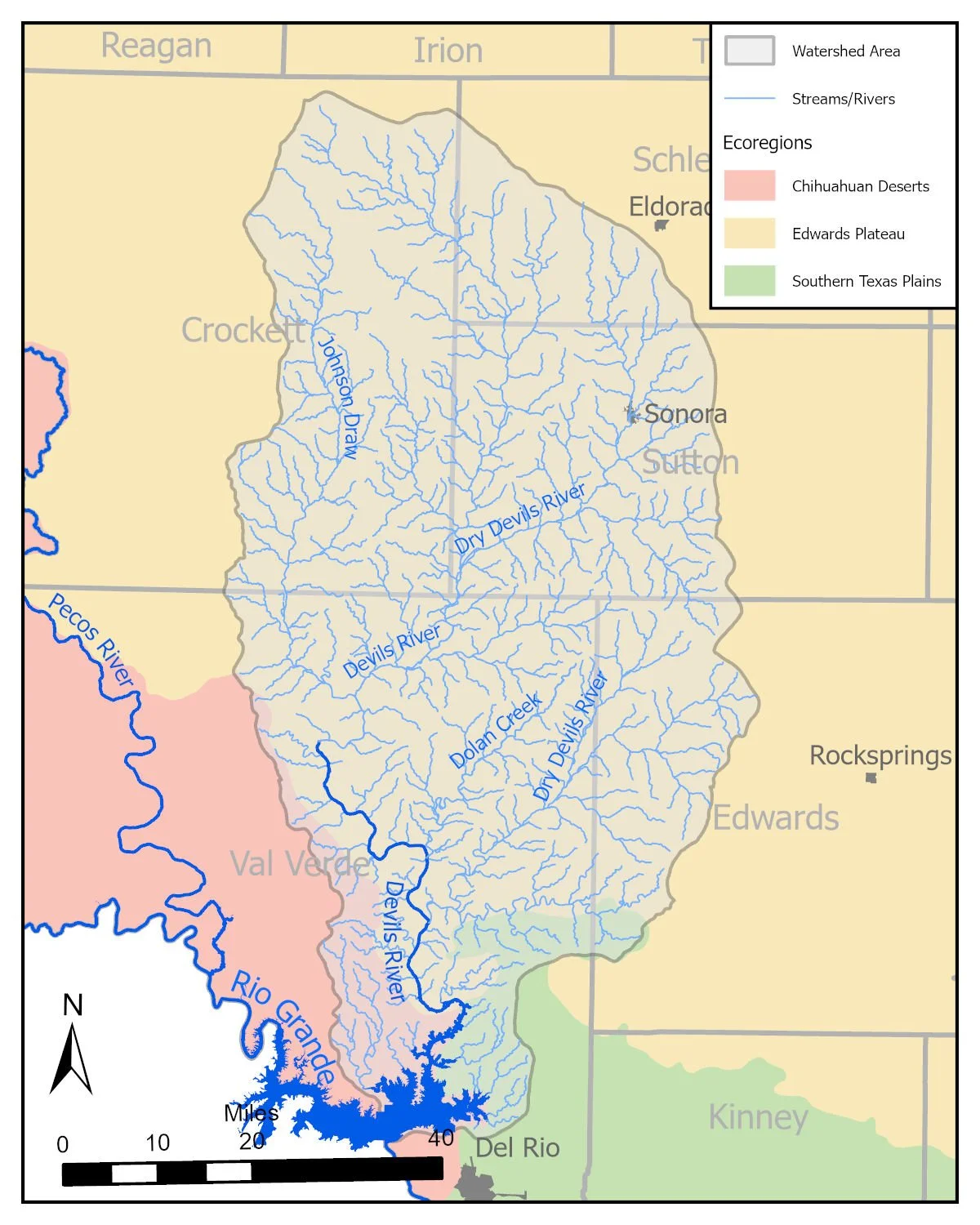
The Devils River Basin is located at the convergence of the eastern edge of the Chihuahuan Desert (pink), the southwestern edge of the Edwards Plateau (yellow), and the northern boundary of the South Texas Plains (green).
The Devils River is located at a nexus of three ecoregions, creating a novel intersection of wildlife and plant species. It is also one of the most biologically intact watersheds in the state due to careful stewardship through many generations, which matters enormously for its fireflies. Very few places left in Texas still offer the ideal combination of limestone bedrock, surface spring flow, native vegetation, and naturally dark skies that allow fireflies to thrive, but the intact riparian corridors of Dolan Creek and the Devils River remain such places.
“It’s a rivers job to drain the landscape, so it’s important to leave everything as you find it. We need the vegetation, it’s not sucking up the water, it’s contributing to the flow. The riparian area is just a tiny piece, just 1% of the whole landscape, and it’s the river’s last defense. When you have problems in the catchment and you have disturbances on the land, the last opportunity for a river to stay healthy is it’s riparian area.”
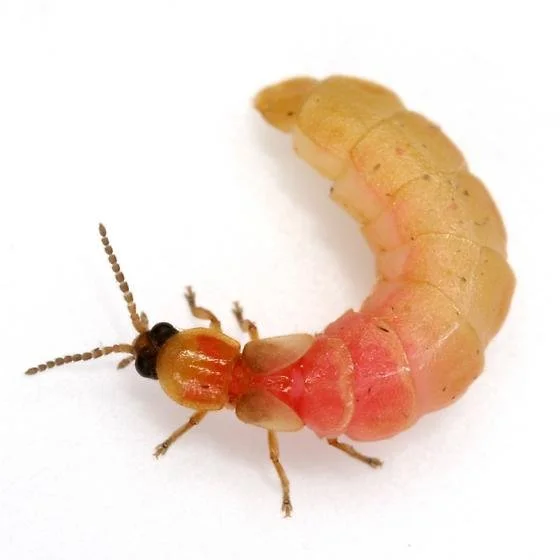
A female Photinus stellaris collected at the Pfeiffer River Ranch on the Devils River.
Credit: Ben Pfeiffer
While the Devils River offers excellent habitat for its fireflies, it also faces challenges to its pristine landscape. Hydrological change, including groundwater depletion and subsequent decreases in spring flow, has likely historically contributed to the loss of spring-fed marsh systems. In modern times, this threat persists, along with increasing light pollution which disrupts mating communication among fireflies, and disturbance of streamside vegetation due to development, which removes leaf litter and specific soil moisture levels which firefly larvae rely on to survive and grow. Pesticide use, particularly pesticides which leach into the soil, are also harmful to firefly larvae.
The Devils River Basin represents one of the last landscapes in Texas where there is still meaningful opportunity to document, protect, and possible rediscover species found nowhere else.
Conservation there is not theoretical. It is urgent and real.
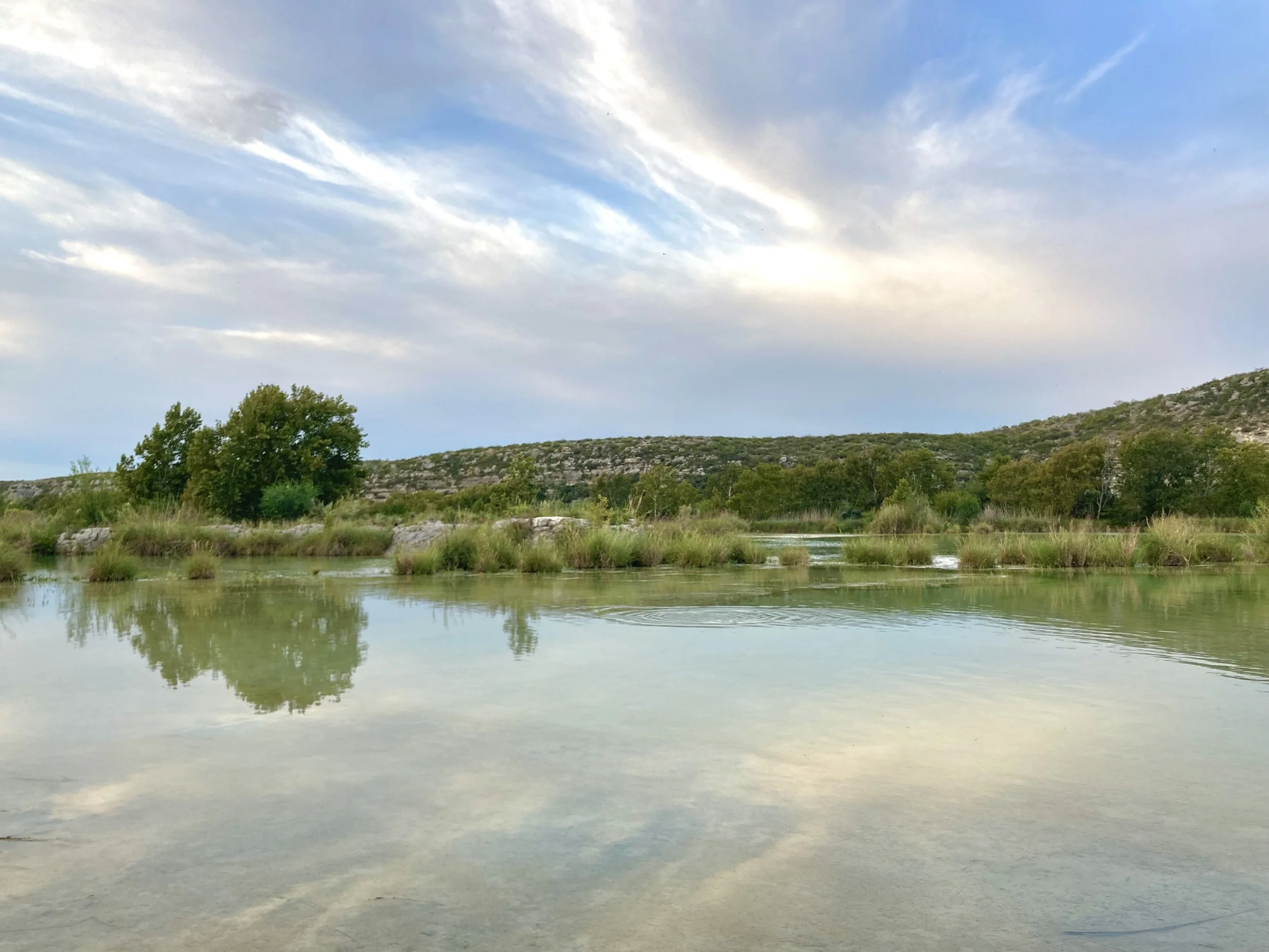
Damming rivers and streams can also fragment adjacent riparian corridors and cause persistent flooding of spring-fed marsh habitat which fireflies rely on. The Devils River is one of the few Texas waterways which remains undammed.
What can be done to support firefly conservation?
If you want fireflies on your property, there's a trifecta: dark skies, native vegetation, and functioning groundwater. Get those three things right and you're most of the way there.
The single biggest thing landowners can do—especially those lucky enough to own river or creek property—is leave the riparian vegetation alone. That tangle of native plants growing right at the water's edge isn't an eyesore to be cleaned up. It is exactly where fireflies live, breed, and flash. The impulse to mow it down and create a manicured park is understandable, but it's about the worst thing you can do for a firefly population. Put the mower away and let it grow.
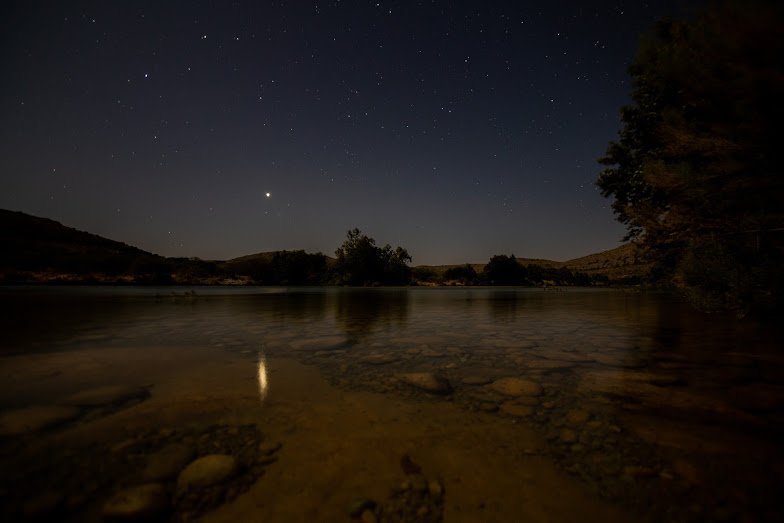
Dark skies over the Devils River. Credit: Jerod Roberts
On the lighting front, turn off what you don't need, especially during peak firefly season, and dial down the intensity of anything that has to stay on. Swap out bulbs for red lights where you can—fireflies can't see red wavelengths, which means those bulbs let you keep your porch lit without scrambling the signals males are sending and females are reading. As a bonus, they won't draw every flying insect in the county to your back door either.
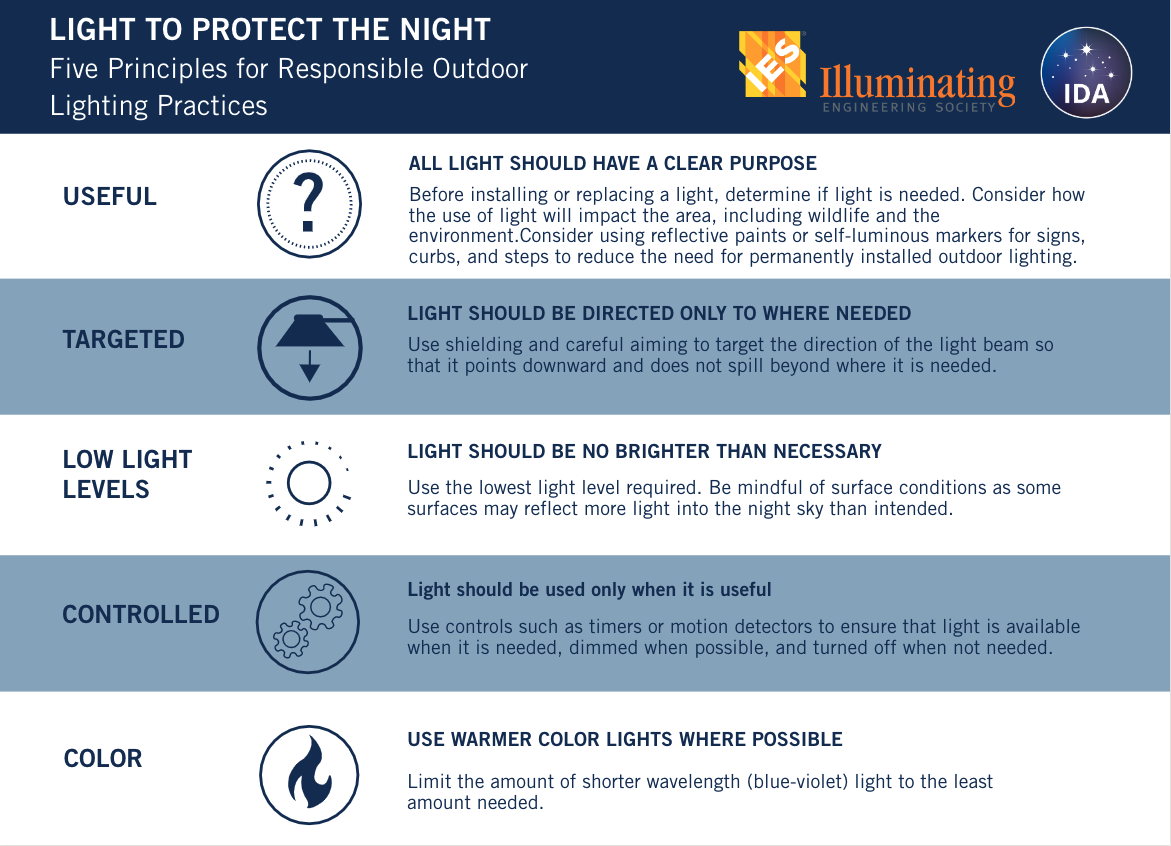
When landscaping, preserving leaf litter and native grasses are critical considerations to protect fireflies, particularly within riparian zones. Native plants also require less water than many introduced ornamentals, which helps conserve critical groundwater resources. Lastly, broad-spectrum insecticides and pesticides can cause harm to many beneficial native species, including fireflies, particularly in riverside habitat where the chemicals are likely to spread further than the targeted area.
Ultimately, small changes at the property level can significantly improve habitat viability across the landscape, benefiting both the wildlife and human communities in the Devils River Basin and across Texas. Let’s ensure that the next generations also experience the joy of seeing fireflies light up the night, matched only by the brilliance of the stars overhead.
“If we protect our intact watersheds and dark skies, we protect fireflies. And if we protect fireflies, we protect far more than just one family of beetles.”
Take action today by supporting Firefly Conservation & Research and furthering this 501(c)3 nonprofit’s mission to to document, understand, and conserve the fireflies of Texas and North America through scientific research, habitat protection, and public education.
The organization, led by Ben Pfeiffer, conducts on-the-ground efforts to ensure fireflies continue to light up our nights for generations to come, at the Devils River and across Texas. Together, we can protect the magic—and expand the science—behind these extraordinary insects and the landscape we share with them.
More Resources
Check out the Research Rangers Firefly Watch activity book for kids (linked above in English and Spanish), designed by Texas State University’s Daniel Biology Education Research Group with contributions by Ben Pfeiffer. For more Research Rangers nature exploration activities, visit their website.
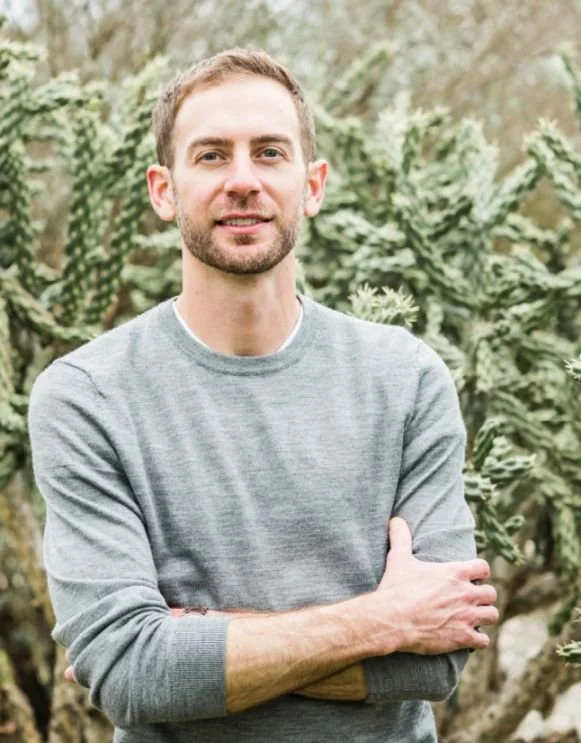
Ben Pfeiffer is a sixth-generation Texan, a field researcher, and the founder of Firefly Conservation & Research. He has spent the better part of two decades documenting firefly diversity, flash patterns, and habitat requirements across Texas—most of it information that had never been systematically recorded before he went looking. A Devils River landowner himself, he works with the IUCN Firefly Specialist Group, the Xerces Society, Texas Parks & Wildlife, The Nature Conservancy, and private landowners, and he is a Texas-certified Master Naturalist who studied Biology at Texas State University. His current work includes the search for rare and possibly lost firefly species and contributing to a growing body of science on North American firefly conservation priorities.
This story was compiled by Dani Miller from written and verbal communications with Ben Pfieffer, founder of Firefly Conservation & Research.