
San Felipe Creek Arundo Control & Restoration Project
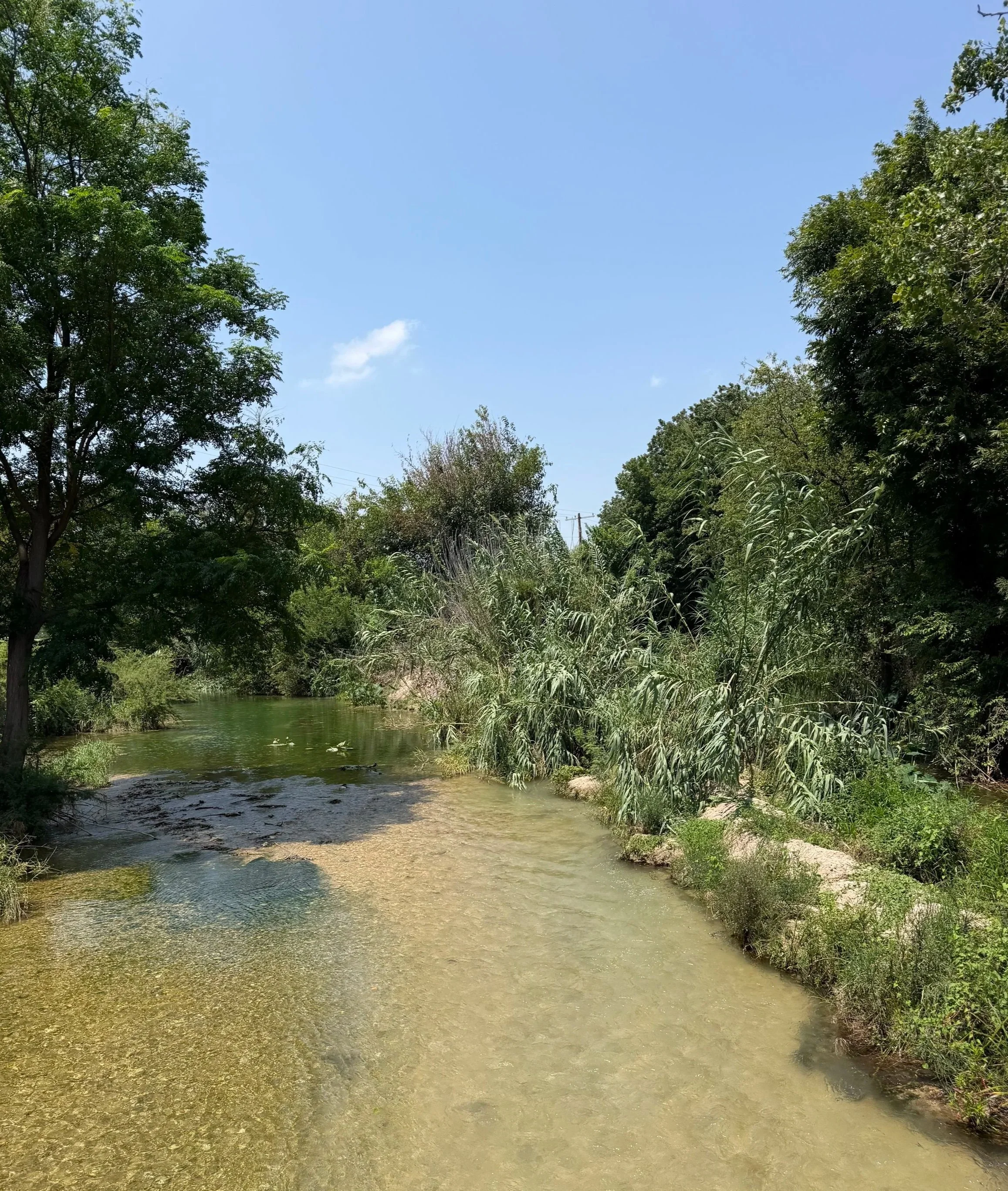
Arundo donax is visible in this photo as the tall, leafy reed or cane-like vegetation on the right side of San Felipe Creek. Credit: Julie Lewey
PROJECT PURPOSE:
To remove Arundo donax, an invasive exotic plant species commonly referred to as giant reed or carrizo cane, from the banks of San Felipe Creek in Del Rio, TX and support restoration of creekside habitat and ecosystem health.
WHY CONTROL ARUNDO?
Arundo is not a native Texas plant, and while it grows quickly here, other plant and animal species living in this creekside riparian habitat are not adapted to its presence. It can take over a bank, creating a monoculture, which actually prevents native species from using resources they should otherwise be able to access.
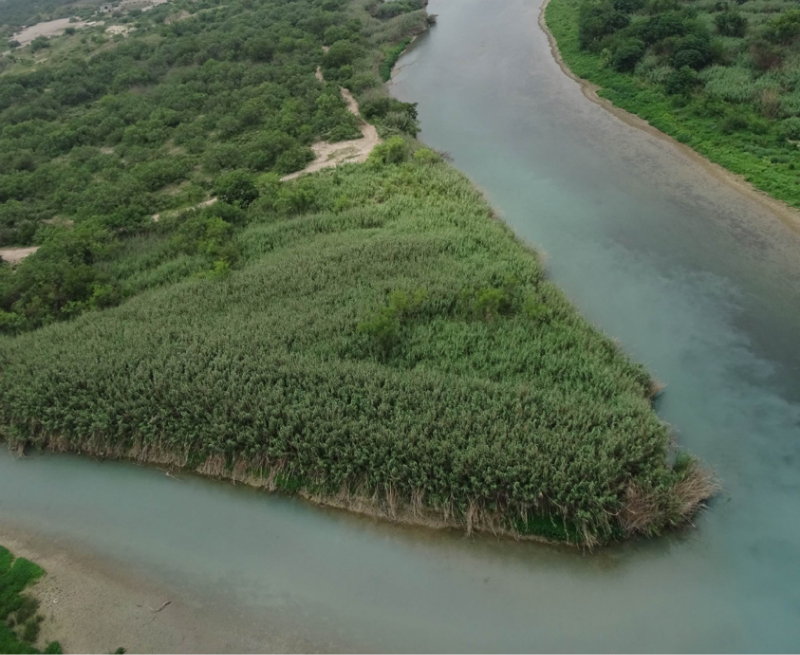
Arundo monoculture at the confluence of San Felipe Creek and the Rio Grande, mowed and untreated. Credit: Julie Lewey
Additionally, Arundo is not very good at the jobs that native riparian plants do in the ecosystem, including controlling erosion, providing cover and food for wildlife, and helping store water in the ground. In fact, it only does about 10% of what native plants can accomplish in the same area.
Arundo also consumes a LOT of water, about 3 times more than native vegetation!
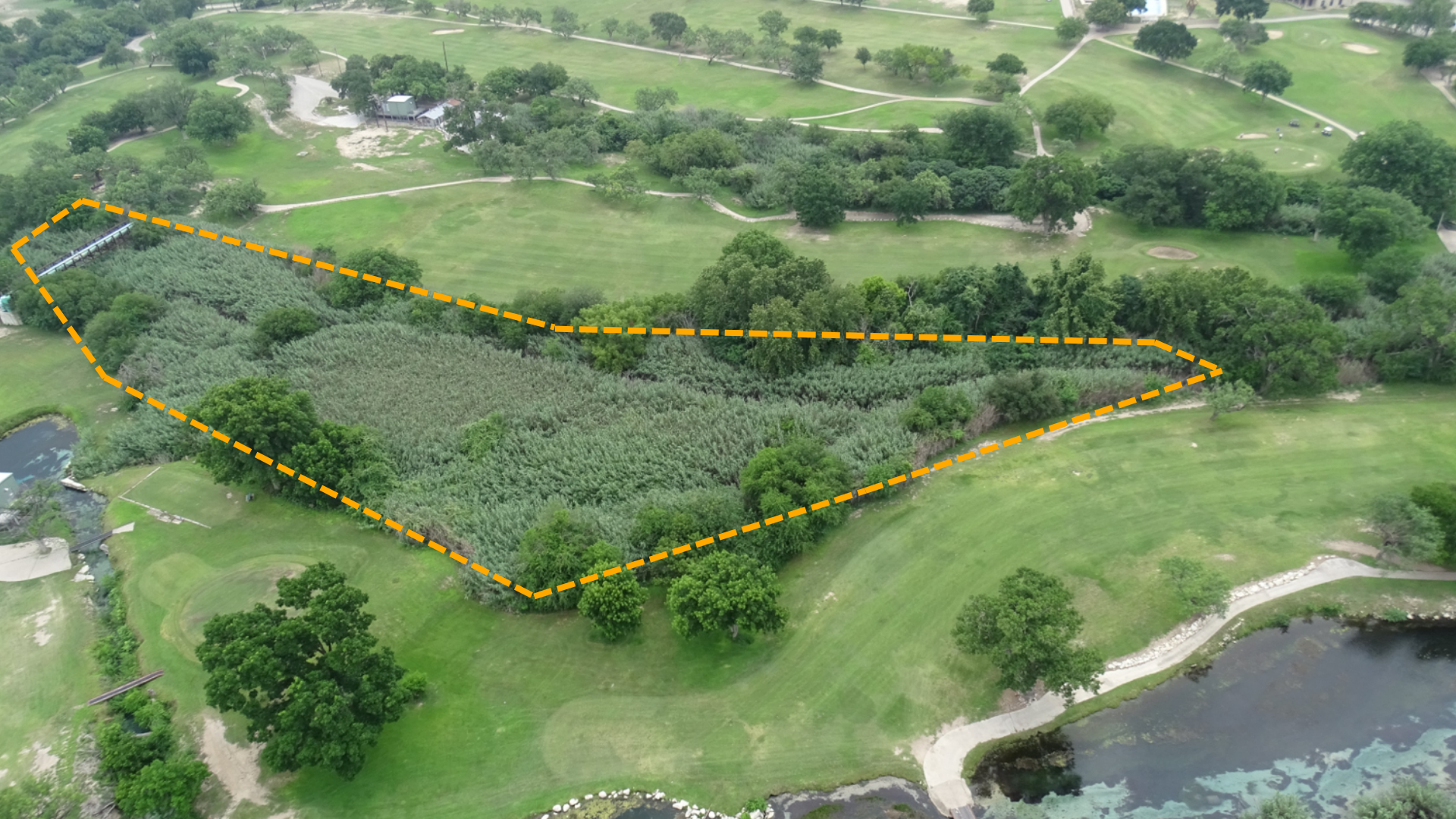
The Arundo growing in the area outlined in the photo consumes approximately 130,000 gallons of water per day, equal to about 450 homes. Credit: Julie Lewey
HOW IS ARUNDO CONTROLLED?
Kill mature Arundo by treating it with herbicide designed for aquatic vegetation. For this project, the specific herbicide is Habitat, with active ingredient Imazapyr.
Leave dead stalks along to avoid stimulating regrowth.
Pull young Arundo sprouts manually, using a specific method to avoid spreading root fragments.
Maintain no-mow zones to support growth of native plants.
Continue treating new growth of Arundo annually.
Plant native vegetation after early successional stage of native regrowth to further encourage habitat restoration and discourage future invasives.
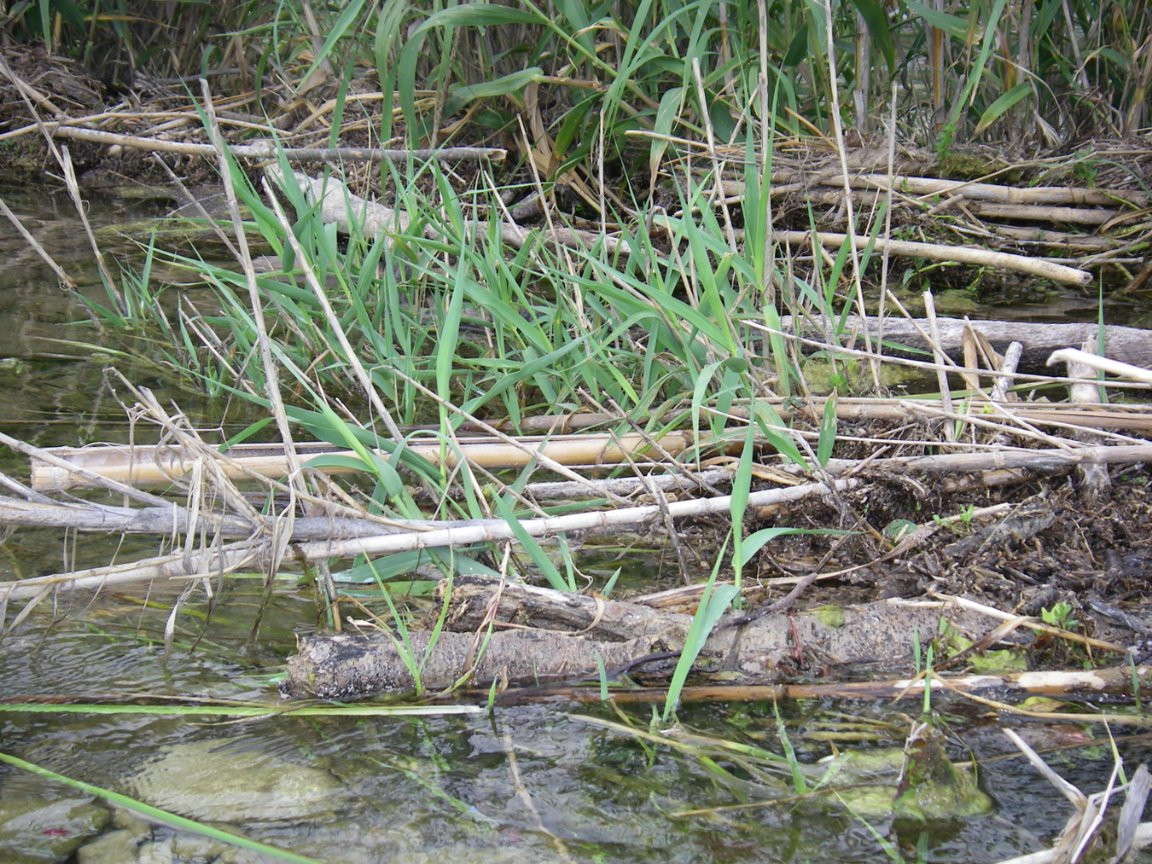
Mowing Arundo instead of applying the appropriate herbicide allows new colonies to sprout from nodes when left near moist areas. Credit: Julie Lewey
PROJECT SCOPE
Controlling Arundo—removing it from the landscape—takes time. This project is a 10-year effort funded by the Texas Parks & Wildlife Department. It began in 2021 under management of the Nueces River Authority, who continued the project through 2025. In 2026, management shifted to the Devils River Conservancy, to continue operations while sustaining place-based expertise.
2026 treatment operations will begin in late September on City of Del Rio parcels along San Felipe Creek, before expanding to private properties through voluntary agreements with landowners. Treatment for this season will end no later than October 31st, and additional treatment will reoccur beginning in 2027.
If you are a San Felipe Creek property owner interested in participating in this project but have not yet been contacted by DRC, please reach out to Sergio at sergiolopezsantillan@gmail.com.
PROJECT EVENTS
DRC hosted an outreach event with the Casa de la Cultura and San Felipe Creek Coalition on Friday, September 4, 2026 to share information about the project, answer questions, and introduce the project coordinator, Sergio Lopez.
Future events will be announced on this page as well as on DRC socials and our email list. Connect on socials and subscribe to our email list through the links in the footer below.

Questions? Contact Sergio Lopez, Project Coordinator, at sergiolopezsantillan@gmail.com or +52 877-789-6739.
DRC staff can be reached by emailing info@devilsriverconservancy.org.